



In today’s sheet metal workshops, accuracy and repeatability matter more than ever. As product designs become more complex, manufacturers are turning to more advanced equipment to keep up. A 6-axis CNC press brake is one such solution, offering better control, higher efficiency, and greater flexibility compared with conventional bending machines.
The key difference lies in motion control. With six controlled axes—commonly Y1, Y2, X, R, Z1 and Z2—the machine can precisely manage ram movement and backgauge positioning at the same time. This allows operators to complete complicated bending sequences with fewer manual adjustments. For companies handling high-precision sheet metal bending projects, this level of coordination makes a noticeable difference in final part quality.
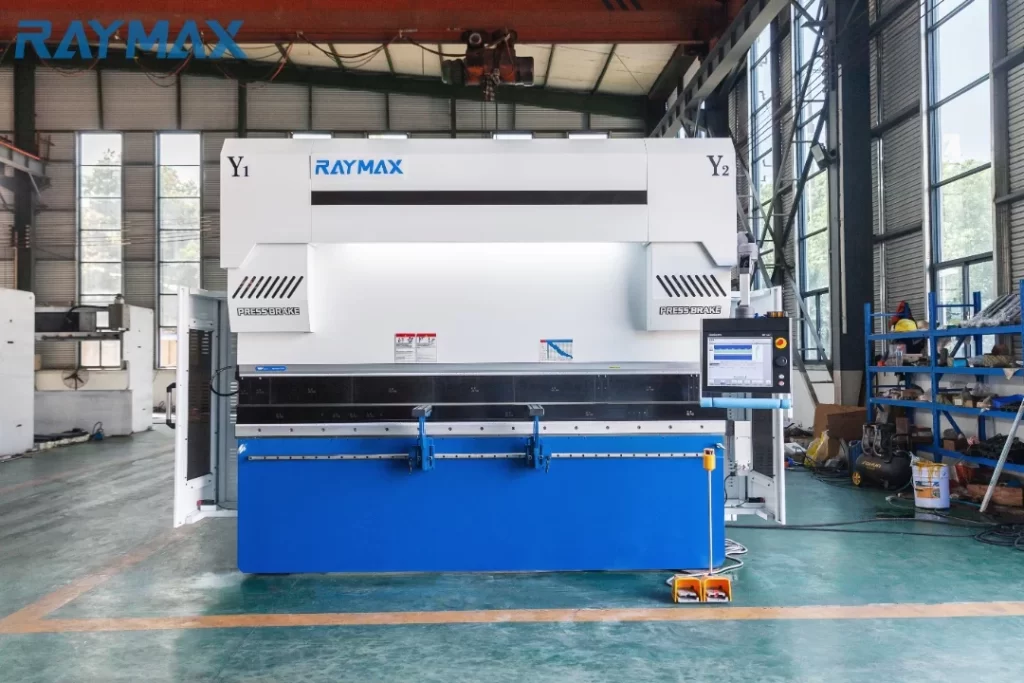
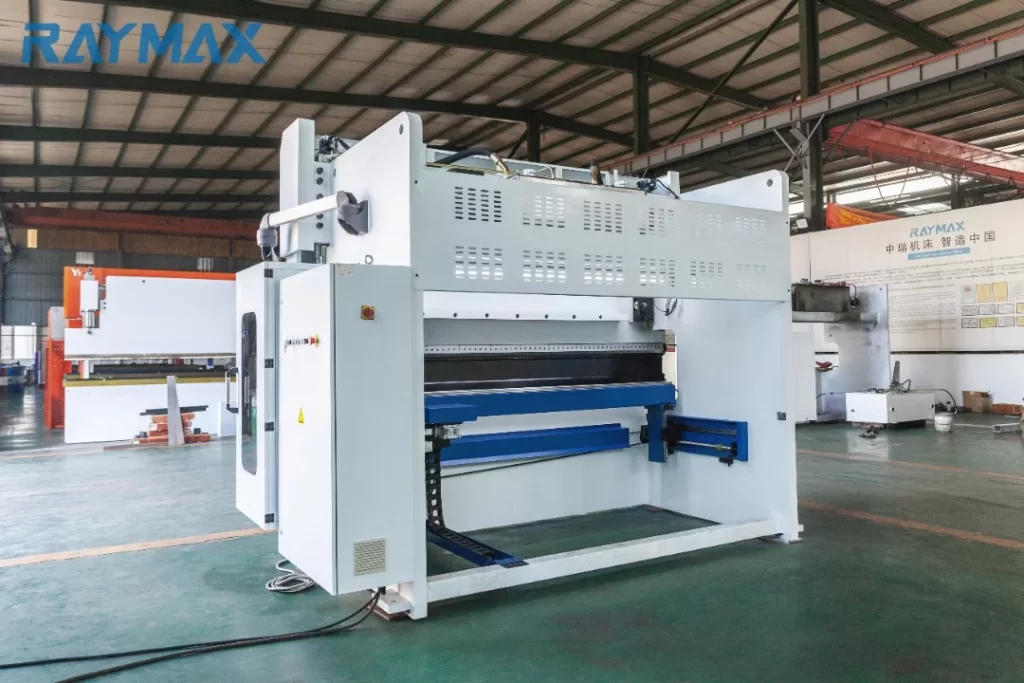
One practical advantage is improved consistency. When producing batches of parts, even small angle variations can cause assembly problems. A CNC hydraulic press brake with 6-axis control maintains parallelism and stable pressure throughout the stroke, helping ensure uniform bend angles across long or thick workpieces. For materials like stainless steel or aluminum, this stability reduces scrap and rework.
Efficiency is another strong point. With programmable backgauges and stored bending programs, a 6-axis CNC press brake machine for custom metal fabrication can switch between jobs quickly. Instead of spending hours on manual positioning and test bends, operators can call up saved parameters and start production sooner. This is especially useful for workshops that handle small-batch or diversified orders.
Flexibility also improves overall workflow. The multiple axes allow more accurate positioning along the X and R directions, while Z1 and Z2 support independent finger movement. This makes it easier to manage irregular parts or multi-bend components. A servo-driven 6-axis CNC press brake for complex parts helps reduce the need for repositioning, which saves time and lowers the risk of handling damage.
Of course, machine quality depends on design and build standards. Raymax has developed its 6-axis CNC press brake series with a focus on structural strength, stable hydraulic systems, and user-friendly controllers. The goal is not to add unnecessary complexity but to provide practical performance improvements that fabricators can rely on every day.
For manufacturers seeking better accuracy without sacrificing efficiency, a six-axis press brake offers a balanced solution. It supports modern production demands while remaining adaptable to different workshop sizes.
FAQ
1. What is the main advantage of a 6-axis CNC press brake over a 3- or 4-axis model?
The additional axes provide more precise backgauge positioning and synchronized control, which improves bending accuracy and reduces manual adjustments.
2. Is a 6-axis press brake difficult to operate?
Most modern systems use intuitive CNC controllers with graphical programming, making daily operation manageable after proper training.
3. Can it handle both thin and thick metal sheets?
Yes. With proper tooling and tonnage selection, a six-axis press brake can process a wide range of materials and thicknesses efficiently.